How Should Businesses Organize AI Efforts So Teams Can Work Together?
Many companies are using AI individually, but not collaboratively. Learn how to organize AI tools, prompts, workflows, standards, and shared knowledge so teams can work together.

Most companies are no longer asking whether employees are using AI.
They are asking a more important question:
How do we make AI useful across the team instead of trapped in individual accounts?
That question matters because many businesses are using AI in fragmented ways. One person has a great prompt. Another person has a better workflow. Someone else tested a useful tool. A marketing coordinator found a way to create content faster. A sales manager used AI to draft follow-up emails. A founder used AI to write a strategy memo.
But if those efforts are not shared, documented, reviewed, and improved, the business does not really own them. The value stays scattered.
Why is individual AI usage not enough?
Individual AI usage can improve personal productivity, but it does not automatically create business capability.
If AI usage stays individual:
- Good prompts are not reused
- Workflows are not documented
- Brand voice varies from person to person
- Tool choices become inconsistent
- Sensitive information may be handled carelessly
- No one knows what is working
- New team members start from scratch
- Leadership cannot see the full opportunity
- The company keeps paying for tools without a system
Team-based AI requires structure.
What does organized AI usage look like?
Organized AI usage means the company has a shared approach to using AI. That usually includes:
- Approved tools
- Defined use cases
- Shared prompt library
- Workflow documentation
- Brand guidelines
- Review process
- Team training
- Knowledge base
- Collaboration standards
- Clear ownership
- Ongoing improvement
This does not need to be complicated. In many businesses, a simple organized workspace can create a major improvement. That is the foundation of an AI Operating System.
What should be included in a shared AI workspace?
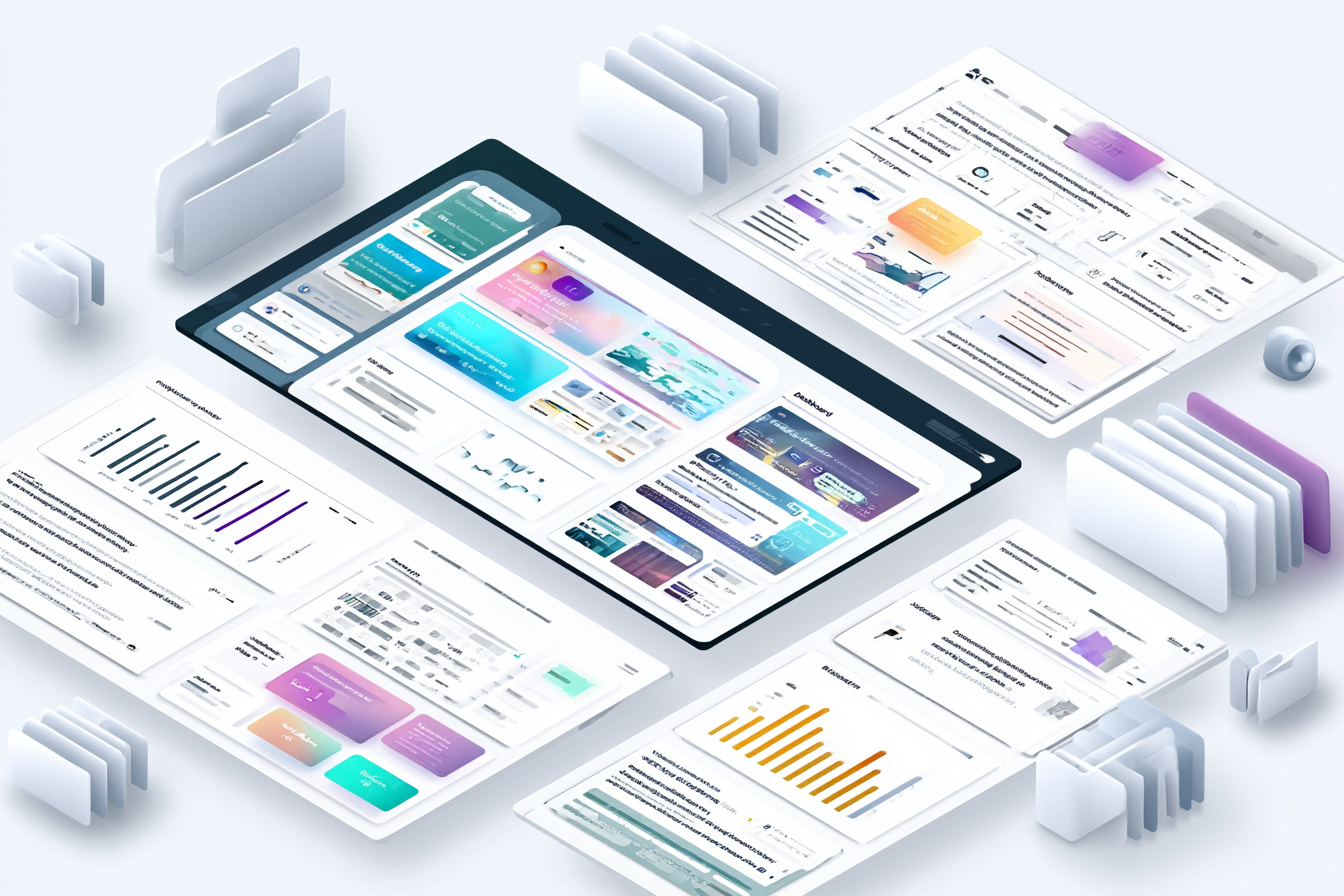
A shared AI workspace is the central place where the team organizes AI-related tools, prompts, workflows, and standards. It may include several sections.
1. AI tool directory
The tool directory answers:
- Which AI tools do we use?
- What is each tool for?
- Who should use each tool?
- What are approved use cases?
- What should not be entered into each tool?
- Are there team accounts or individual accounts?
- Where are login or access instructions?
- Who owns the tool?
A tool directory prevents confusion and reduces random experimentation.
2. Prompt library
A prompt library stores reusable prompts. Useful categories may include marketing, sales, customer service, operations, meeting summaries, website content, blog, email, proposals, research, social media, brand voice, and image generation prompts.
A good prompt library should not just store prompts. It should also explain when to use the prompt, what input is needed, what output to expect, who should review it, example results, and notes for improvement.
3. Workflow playbooks
Workflow playbooks explain how to use AI for repeated work. Examples include:
- Turn a meeting transcript into action items
- Turn a sales call into CRM notes
- Turn a customer question into a blog post
- Turn a product description into ecommerce copy
- Turn a service explanation into website copy
- Turn a campaign idea into social posts
- Turn a rough outline into a proposal draft
- Turn research notes into an executive summary
Each playbook should include goal, inputs, tools, prompt, steps, output, review process, owner, and storage location.
4. Brand and content standards
If a team uses AI to create customer-facing content, brand standards are essential. The workspace should include brand voice, tone examples, messaging pillars, product or service descriptions, audience definitions, words to use, words to avoid, approved claims, a review checklist, and example final outputs.
This helps prevent AI content from sounding generic or off-brand.
5. AI policy and safety guidance
A business does not need a massive policy document to begin organizing AI responsibly. But it should define basic rules, such as:
- What information should not be entered into AI tools
- Which tools are approved
- Who can use paid tools
- Who reviews external content
- How sensitive client or customer information is handled
- What requires human review
- What AI should not be used for
This gives employees confidence and reduces risk.
6. Training resources
A shared workspace should include practical training materials. Examples: how to write a better prompt, how to use the company prompt library, how to review AI output, how to use AI for research or content or image generation, how to follow brand standards, and how to suggest improvements to workflows.
Training should be short, specific, and tied to real work.
How should teams share AI prompts?
Teams should treat strong prompts like business assets. A good shared prompt should include:
- Prompt title
- Use case
- Department
- Tool
- Full prompt text
- Required inputs
- Example output
- Notes
- Owner
- Last updated date
For example:
Prompt title: Customer FAQ to Blog Post
Use case: Turn a common customer question into a helpful article draft.
Department: Marketing / Customer Support
Tool: ChatGPT or Claude
Required inputs: Customer question, company answer, target audience, service details.
Review: Marketing reviews for tone. Subject matter expert reviews for accuracy.
This level of structure makes prompts easier to reuse and improve.
Who should own AI organization inside the business?
AI organization needs ownership. In a small or mid-sized business, ownership may sit with a founder or CEO, marketing leader, operations leader, digital director, technology lead, external AI consultant, or a cross-functional working group.
The owner does not need to know every tool deeply. But they do need to maintain the system. Responsibilities may include:
- Keeping tool guidance updated
- Reviewing new workflows
- Maintaining prompt libraries
- Coordinating training
- Managing AI workspace structure
- Gathering feedback from the team
- Prioritizing new AI opportunities
Without ownership, the AI system will become stale.
How can departments collaborate around AI?
Different departments can use AI differently while still sharing one system.
Marketing may use AI for content planning, blog outlines, SEO research, social posts, email campaigns, campaign briefs, landing page drafts, brand voice checks, and image generation. Visibility-focused workflows can also support an AI Visibility Engine that helps the business get found in AI-driven search.
Sales may use AI for follow-up emails, proposal drafts, objection handling, call summaries, lead research, account preparation, and CRM note formatting.
Operations may use AI for SOP documentation, process improvement, meeting summaries, internal checklists, task routing, vendor comparisons, and reporting summaries.
Customer service may use AI for response templates, knowledge base articles, ticket summaries, FAQ development, and internal escalation notes.
Leadership may use AI for decision support, strategy drafts, competitive analysis, internal communication, meeting preparation, and scenario planning.
Each department can have its own workflows while sharing common standards.
What tools can help teams organize AI work?
Several types of tools can support team AI organization.
Knowledge base tools are useful for storing SOPs, prompt libraries, brand guidelines, workflow documentation, and training materials.
Project management tools are useful for tracking AI implementation tasks, content production, workflow improvements, team assignments, and review cycles.
AI assistant platforms are useful for team-based AI usage, shared projects, document analysis, drafting, research, and ideation.
Automation tools are useful for connecting AI to forms, CRMs, spreadsheets, email systems, project management platforms, and notification systems.
Asset management tools are useful for organizing AI-generated visuals, approved graphics, prompt references, campaign assets, and brand examples.
The specific tools matter less than the system. A simple system used consistently is better than a complex system no one uses.
What is the difference between an AI workspace and an AI Operating System?
An AI workspace is where the materials live.
An AI Operating System is the broader structure for how the business uses AI.
The workspace may contain prompts, tools, workflows, guidelines, and training.
The operating system includes strategy, ownership, priorities, review process, use cases, tool selection, team adoption, governance, and ongoing improvement.
The workspace supports the operating system.
How should a business start organizing AI efforts?
Start small. A practical first version may include the following steps.
Step 1: Audit current AI usage. Who is using AI? What tools are they using? What are they using AI for? What outputs are useful? What risks or frustrations exist? What repeated tasks could be improved?
Step 2: Choose priority use cases. Pick a few areas where AI can create immediate value — marketing content, sales follow-up, internal documentation, meeting summaries, social visuals, customer support responses.
Step 3: Create a shared workspace. Set up a simple hub for tools, prompts, workflows, guidelines, and examples.
Step 4: Document the first workflows. Do not try to organize everything at once. Document two or three high-value workflows first.
Step 5: Train the team. Show people how to use the system in the context of their actual work.
Step 6: Improve over time. Review what works, update prompts, refine workflows, and add new use cases.
How can Jim Zaslaw help?
Jim Zaslaw Consulting helps companies organize AI into practical team systems.
That may include:
- Free AI Opportunity Assessment
- Current AI usage audit
- Tool selection and setup
- Shared workspace structure
- Prompt library development
- Workflow documentation
- Team training
- Brand and content standards
- Collaboration guidelines
- Ongoing advisory
Jim's approach is grounded in real digital execution. Through ZINC, he has spent more than 25 years helping companies build brands, websites, ecommerce platforms, marketing systems, and technology integrations.
That matters because team-based AI is not only a technology issue. It is a workflow, communication, brand, content, and operations issue.
Final takeaway
AI becomes more valuable when it becomes shared.
The goal is not to make every employee an AI expert.
The goal is to give the team a smarter system for using AI together.