How Is AI Affecting Branding? What Business Leaders Need to Know
AI is changing branding, content, design, and customer perception. Learn how businesses can protect brand consistency while using AI to move faster.
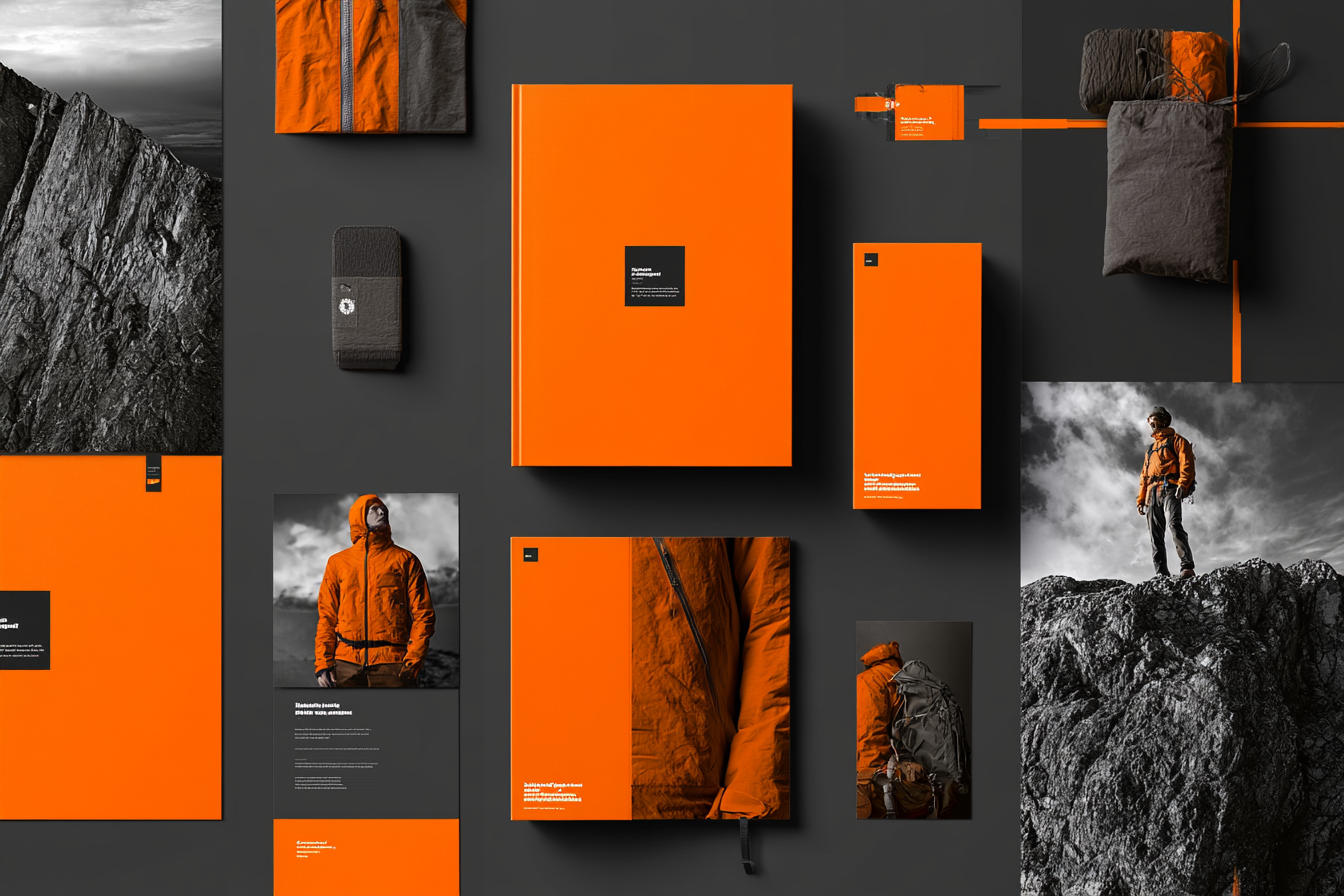
AI is changing branding faster than many companies realize.
For years, branding was mostly controlled by a small group of people: founders, executives, marketing leaders, designers, copywriters, agencies, and brand teams. They shaped the logo, voice, messaging, website, visuals, campaigns, and customer experience.
AI changes that.
Now almost anyone inside a business can create copy, images, emails, social posts, website sections, sales materials, and campaign ideas in minutes.
That creates a huge opportunity. It also creates risk.
The businesses that benefit most from AI will not be the ones generating the most content. They will be the ones that know how to use AI without losing the clarity, consistency, and personality of the brand.
Why does AI matter for branding?
AI matters for branding because it changes who can create brand-facing material.
Before AI, most customer-facing content went through some kind of creative or marketing process. That process may have been slow, but it usually included human judgment, brand review, and quality control.
Now AI allows more people to create more material faster. That includes:
- Website copy
- Blog posts
- Social media captions
- Email campaigns
- Product descriptions
- Sales decks
- Proposal language
- Customer support responses
- Recruiting content
- AI-generated images
- Ad concepts
- Landing pages
- Video scripts
- Internal brand summaries
That speed can be valuable, but only if the business has a clear brand system. Without that system, AI can make a company look and sound inconsistent very quickly.
What is the biggest branding risk with AI?
The biggest risk is not that AI produces bad content.
The bigger risk is that AI produces content that is technically fine but strategically generic.
Generic AI content often sounds polished, but it does not sound specific. It may use correct grammar, confident phrasing, and acceptable structure, but it does not express the company's actual point of view.
The result is content that feels safe, bland, and interchangeable.
Common signs of generic AI branding include:
- Overused phrases like "unlock your potential"
- Vague claims without proof
- Repetitive sentence structures
- Generic benefit statements
- Copy that could apply to any competitor
- Visuals that look polished but disconnected from the brand
- Messaging that lacks a distinct point of view
- Social posts that sound like everyone else using the same tools
This is the branding problem many companies will face. They will produce more, but they may become less memorable.
Can AI help a brand become stronger?
Yes, but only if AI is guided by clear brand strategy.
AI can help a brand become stronger when it is used to extend a clear idea, not replace one. AI can help businesses:
- Explore positioning options
- Draft brand messaging
- Compare tone variations
- Create customer personas
- Generate campaign ideas
- Repurpose content across channels
- Build internal brand guidelines
- Create visual mood boards
- Test messaging frameworks
- Develop FAQ and sales content
- Turn strategy into usable templates
The key is that AI needs direction. If the company does not know what it stands for, AI will not solve that. It may only produce a more polished version of the confusion.
How should businesses use AI in brand strategy?
AI can support brand strategy, but it should not own brand strategy.
A strong brand strategy still requires judgment around audience, positioning, differentiation, customer pain points, market opportunity, competitive landscape, tone of voice, visual identity, proof points, offer structure, and business goals.
AI can help organize, pressure-test, and generate options around those topics. For example, a business can use AI to ask:
- What questions are our customers asking?
- How do competitors describe themselves?
- What language appears repeatedly in our category?
- What claims are overused?
- What positioning gaps might exist?
- What objections do buyers likely have?
- What messages are clearer or more compelling?
- How can we explain our value in simpler language?
But the final decisions still need to come from leadership and experienced brand judgment.
What parts of branding can AI improve quickly?
AI can be especially useful in several brand-related areas.
1. Brand voice documentation
Many companies have a brand voice, but it lives informally in the heads of founders, marketers, or senior team members.
AI can help turn that informal understanding into documented guidelines: how the brand should sound, how it should not sound, words to use, words to avoid, examples of strong copy, examples of weak copy, audience-specific tone guidance, sales language, website language, social media tone, and email tone.
Once documented, those guidelines can be used to improve AI prompts and review AI-generated content.
2. Messaging clarity
AI can help simplify complicated messaging. A company can use AI to turn a complex explanation into:
- A homepage headline
- A sales email
- A one-sentence positioning statement
- A LinkedIn post
- A customer FAQ
- A landing page section
- A founder pitch
This is especially useful for businesses with technical, professional, or complex services.
3. Content consistency
AI can help create consistent content across channels. A single core message can be adapted into website copy, blog content, sales enablement, email marketing, social media, webinar topics, internal training, and customer support scripts.
The danger is inconsistency. The opportunity is scale. A good AI brand system makes sure the content stays connected to the same strategic foundation.
4. Visual exploration
AI image tools can help brands explore campaign concepts, visual directions, social media styles, website imagery, product environments, mood boards, brand photography direction, and illustration styles. This can speed up creative exploration dramatically.
But final visual direction still needs discipline. A brand should not chase every image style AI can produce. A structured AI Brand Asset System helps make AI-generated visuals repeatable and on-brand.
5. Internal brand adoption
AI can help teams understand and apply brand standards. A company can create AI-assisted tools that help employees rewrite content in the brand voice, check whether copy fits the brand, generate first drafts from approved examples, create campaign briefs, summarize brand guidelines, and adapt messaging for different audiences.
This makes branding more usable inside the business.
How does AI change the role of brand guidelines?
Traditional brand guidelines often sit in a PDF that few people read.
AI changes what brand guidelines need to be. A modern AI-ready brand system should include:
- Brand positioning
- Audience definitions
- Messaging hierarchy
- Tone of voice
- Visual style guidance
- Approved examples
- Prompt instructions
- Image generation guidance
- Do / don't examples
- Channel-specific rules
- Review workflows
- Asset storage structure
The goal is not just to describe the brand. The goal is to make the brand usable by people and AI tools.
What is an AI-ready brand?
An AI-ready brand is a brand with enough structure that AI tools can help create useful, consistent outputs.
An AI-ready brand should have:
- Clear positioning
- Defined audience segments
- A documented voice
- Strong example copy
- Approved visual references
- Messaging pillars
- Product or service descriptions
- Competitive differentiation
- Brand vocabulary
- Prompt-ready guidance
- Review standards
If this foundation is missing, AI will guess. And when AI guesses, the brand usually becomes more generic.
How can AI hurt brand trust?
AI can hurt brand trust when companies use it without enough review or strategy. Common problems include:
- False or exaggerated claims
- Inconsistent tone
- Off-brand imagery
- Repetitive content
- Generic thought leadership
- Incorrect information
- Over-automation of customer communication
- Lack of human perspective
- Content that feels mass-produced
- Visuals that do not match the company's real world
Trust is built through consistency and specificity. AI can support both, but only when used carefully.
What should business leaders do now?
Business leaders should not simply ask, "How can we use AI for branding?"
They should ask:
How do we make our brand clear enough that AI can help us scale it without diluting it?
That means reviewing brand strategy, website messaging, content quality, voice and tone, visual standards, team workflows, prompt systems, review process, asset management, and AI tool usage.
This is where AI branding becomes more than design. It becomes an operating discipline.
How can Jim Zaslaw help?
Jim Zaslaw Consulting helps businesses use AI without losing brand clarity.
Through ZINC, Jim has spent more than 25 years helping companies build brands, websites, ecommerce platforms, marketing systems, and technology integrations. That experience matters because AI branding is not just about using new creative tools. It is about connecting strategy, content, design, workflows, and execution.
Jim can help businesses:
- Assess how AI is currently affecting the brand
- Build AI-ready brand guidelines
- Create brand voice prompts
- Organize visual AI workflows through an AI Brand Asset System
- Develop on-brand content systems
- Improve website and marketing messaging
- Set up team standards for AI-generated content
- Create review processes for AI output
The first step is a Free AI Opportunity Assessment.
Final takeaway
AI will make it easier than ever to create content.
That does not automatically make branding easier.
The companies that win will be the ones that use AI to express a clearer, stronger, more consistent brand — not the ones that simply publish more generic material.